
Macro at a Glance
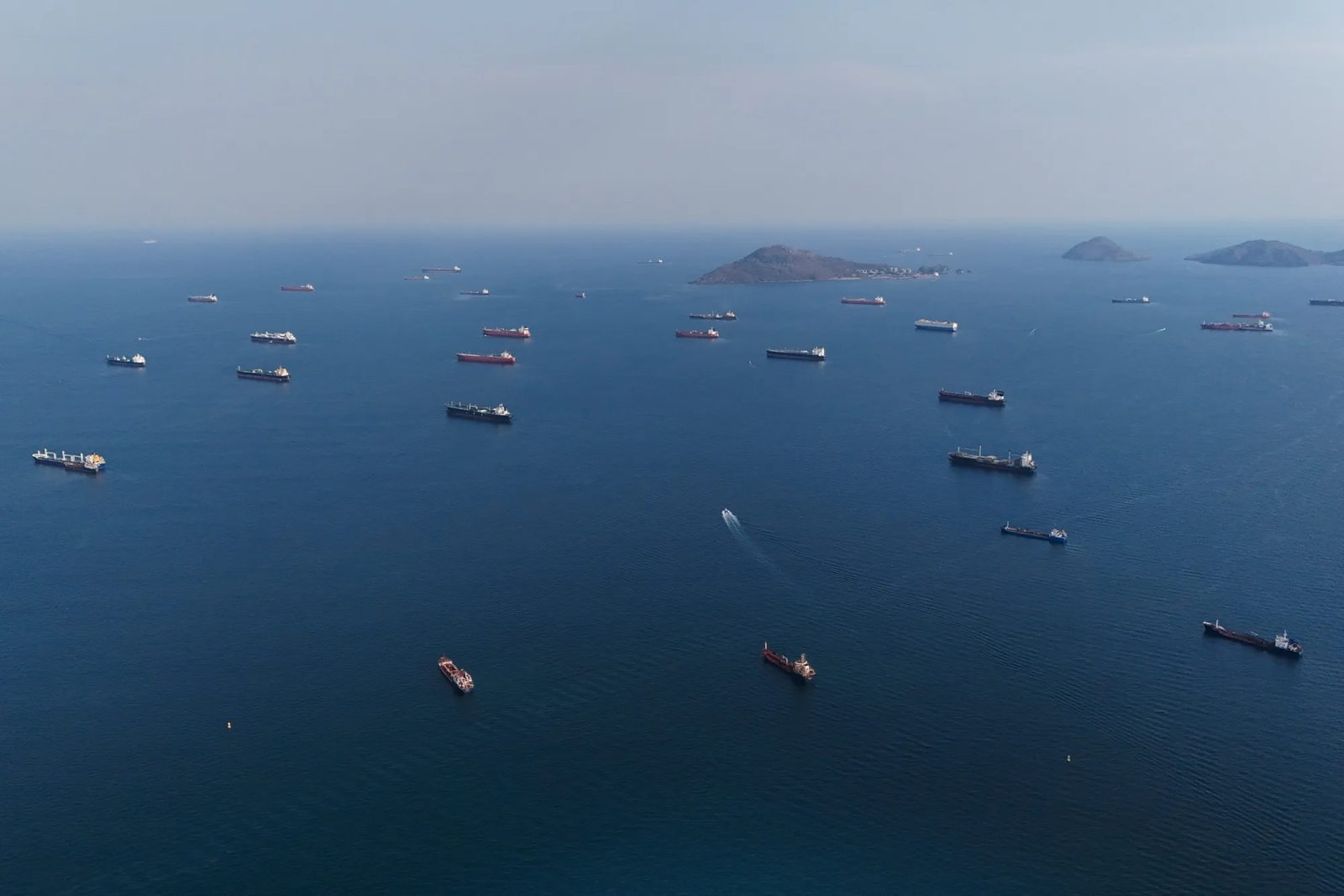
Over one month into the conflict, the U.S. and Israeli operations against Iran have stalled despite striking more than 10,000 targets. President Trump's anticipated "quick operation" evolved into a regional conflict with significant military, energy, and political ramifications. Iran's regime remains resilient and continues retaliatory strikes. The conflict's focal point has shifted to the Strait of Hormuz, which Iran substantially restricts while suggesting selective passage access in exchange for payment from neutral nations.
Israel simultaneously resumed Hezbollah operations in Lebanon and invaded the country's southern region. The Houthis have launched multiple missile attacks on Israel and threatened closure of the Strait of Bab el-Mandeb, disrupting Europe-Asia trade routes. Following Ali Khamenei's death, his son Mojtaba assumed leadership within a system increasingly controlled by the Revolutionary Guards.
Negotiations continue through intermediaries, though their substance remains opaque. Tehran suspects Washington primarily seeks time while preparing escalated military options. This perception intensified following additional U.S. Marine and airborne troop deployments, as planners discuss potential ground operations near Kharg Island and Strait of Hormuz access points.
Trump faces a dilemma: backing down risks allowing an Iranian victory despite Strait blockade maintenance; escalation could entangle America in its most perilous Middle Eastern conflict since Iraq. Extended conflict duration threatens mounting economic and electoral consequences as November midterms approach.
Monetary Policy and Markets
The Federal Reserve and European Central Bank maintained unchanged rates in March—the Fed holding at 3.50%-3.75%, the ECB at 2.00%. Treasury yields reached their highest levels since July 2025: 10-year bonds yielded 4.43%, 2-year bonds 3.93% as of March 27. CME FedWatch data indicated over 60.2% market probability the Fed would maintain or raise rates through December.
Geopolitical conflict consequences appeared starkly in credit default swap markets. Qatar's 5-year CDS spreads jumped 60% between mid-February and mid-March; Bahrain's increased nearly 46%; Dubai's rose 54%; Abu Dhabi's climbed 50%.
One Sector, One Insight
Basic Materials and Energy
TotalEnergies SE (TTE.PA) abandoned its net-zero 2050 emissions target, citing slower-than-expected fossil fuel abandonment and stringent EU regulations. The company maintains carbon neutrality aspirations for operations by mid-century and continues client emissions reduction support.
CEO Patrick Pouyanne stated: "We must, however, confront our ambition with reality," noting the transition pace doesn't yet enable Paris Agreement objectives.
Consumption and General Public Services
Unilever (ULVR.L) and McCormick (MKC) agreed to merge Unilever Foods with McCormick via "Reverse Morris Trust," a tax-efficient arrangement. Under the agreement, Unilever and shareholders retain 65% ownership post-dilution; Unilever receives $15.7 billion cash; Unilever Foods valuations reach nearly $45 billion, with the combined entity worth approximately $65 billion. This transaction enables Unilever's gradual food market exit following unsuccessful Kraft Heinz (KHC) negotiations.
Financial Services
On March 19, the U.S. Treasury's FinCEN formally designated MBaer Merchant Bank (Zurich-based) as a "primary money laundering concern," confirming 80% of clients and 98% of assets involved high-risk counterparties, including sanctioned Iranian oil trading entities. Swiss regulator FINMA withdrew MBaer's banking license and initiated liquidation. Four individuals connected to the bank faced legal proceedings.
Healthcare
Sydney tech entrepreneur Paul Conyngham used ChatGPT to advise his dog Rosie's cancer treatment in 2024. Following unsuccessful chemotherapy and surgery, he pursued immunotherapy via UNSW genomic sequencing and AlphaFold protein analysis. Pall Thordarson developed a custom mRNA vaccine; Rosie received initial injection December 2024 and booster February 2025. Most tumors substantially shrank with improved behavior and energy, highlighting AI's healthcare sector potential despite incomplete cure.
Industrials
Volkswagen (VOW.DE) discussed converting its Osnabrück, Germany factory with Israeli defense company Rafael Advanced Defence Systems to produce Iron Dome air defense system support components. The plant currently employs 2,300 workers producing the T-Roc Cabriolet, ending production mid-2027. This reflects German automotive competitiveness struggles and defense sector shift. Works council approval remains prerequisite; no finalized agreement exists.
Technology and Network Equipment
Middle East conflict and direct Qatar LNG facility strike triggered escalating helium shortage threatening semiconductor supply chain. Qatar supplies approximately 33% global helium output—essential for silicon wafer cooling and chip fabrication. Air Liquide's Armelle Levieux stated the company diversifies sources and assesses stockpiles; technical volatility limits liquid helium reserves to approximately 1.5 months before dangerous storage conditions.
South Korean firms Samsung Electronics (005930.KS) and SK Hynix (000660.KS) face highest vulnerability, relying on Qatar for nearly 66% supply. TSMC (TSM) reports no immediate impact, though analysts warn Strait of Hormuz closure stranded 200 specialized containers. Chipmakers' high fabrication halting costs likely drive production cost increases for AI-grade silicon.
Stock of the Month
CF Industries (CF) surged 30% in March, reaching all-time high $141 Monday. The rally stems from Iran-Israel conflict crippling Middle East production responsible for nearly 50% global urea and 30% ammonia exports. With Strait of Hormuz effectively closed, global urea prices spiked over 30%, reaching $665/ton.
As dominant North American producer, CF possesses decisive energy-to-food bridge advantage. While European competitors face 85% month-on-month gas price increases, CF benefits from Permian Basin's cheap nitrogen-heavy natural gas oversupply, providing low-cost feedstock.
Key Performances
| Index/Asset | March 31 | Monthly Change | YTD |
|---|---|---|---|
| S&P 500 | 6,528.52 | -5.09% | -4.63% |
| Dow Jones | 46,341.51 | -5.38% | -3.58% |
| NASDAQ | 21,590.63 | -4.75% | -7.11% |
| FTSE 100 | 10,176.45 | -6.73% | 2.47% |
| CAC 40 | 7,816.94 | -8.90% | -4.08% |
| DAX | 22,680.04 | -10.30% | -7.39% |
| SMI 20 | 12,776.79 | -8.83% | -3.70% |
| MSCI World | 4,262.91 | -8.62% | -6.02% |
| VIX | 25.25 | 27.14% | 68.90% |
| CHF/USD | 1.2511 | -3.80% | -0.91% |
| CHF/EUR | 1.0826 | -0.75% | 1.62% |
| Brent $/barrel | 103.28 | 42.49% | 66.80% |
| Gold $/oz | 4,699.60 | -10.15% | 7.54% |
Upcoming Events
- April 5: OPEC+ meeting (first since war commencement)
- April 10: U.S. CPI (March)
- April 28-29: U.S. FOMC meeting