
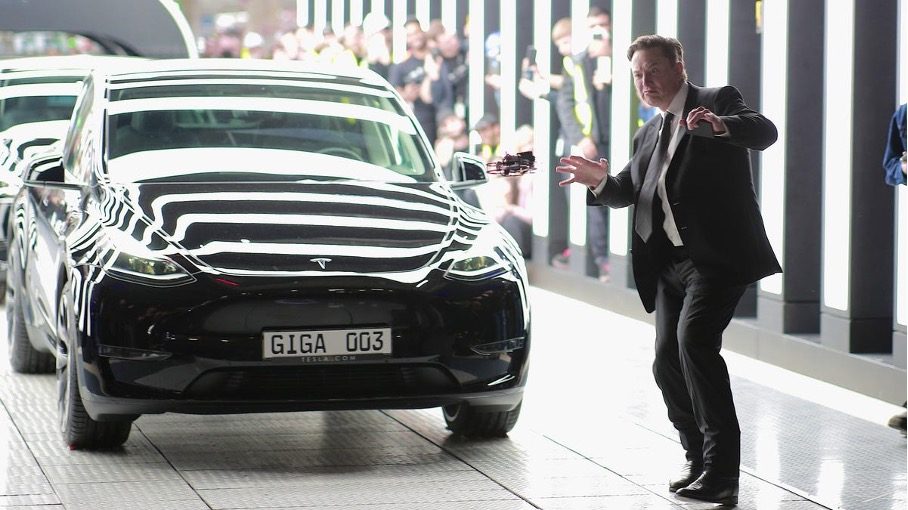
Elon Musk: Tesla's Greatest Asset
Tesla's transformation from a Silicon Valley startup into the world's most valuable automaker is fundamentally connected to Elon Musk. His visionary leadership and distinctive personality have propelled the company forward, establishing him as its most significant advantage.
Musk's personal brand and media reach have proven invaluable to Tesla's marketing strategy. The company famously invests zero dollars in paid advertising, yet maintains constant public visibility through Musk's 140+ million followers on X (formerly Twitter) and his frequent media appearances. Notable examples include the 2018 launch of a Tesla Roadster into space via SpaceX rocket—a marketing accomplishment that generated worldwide attention without traditional advertising expenditure. His social media presence functions as an unofficial promotional channel, with product announcements and bold declarations regularly generating international headlines.
As Margaret O'Mara, a Silicon Valley historian at the University of Washington, noted in The Atlantic: "Tesla is what it is because of Elon and because of his outsized persona." This "Elon mystique"—the perception of him as an audacious innovator developing rockets, tunnels, and revolutionary vehicles—has substantially elevated Tesla's market valuation and public fascination.
Musk's technological leadership has also been essential. Under his guidance as CEO and "Product Architect," Tesla pioneered innovations including extended-range lithium-ion batteries, over-the-air software updates, and high-performance electric drivetrains. These breakthroughs transformed Tesla from a niche EV manufacturer into a global automotive powerhouse.
Tesla's market capitalization soared beyond $650 billion in just over a decade, far surpassing established automakers. This valuation reflects investor confidence in Musk's ambitious promises and demonstrated capacity to execute. His "Elon premium"—the belief that Musk can achieve the seemingly impossible—has enabled Tesla to raise capital affordably and fund expansion into battery plants, new vehicle models, and related ventures.
Musk's political influence and access to policymakers have also benefited Tesla strategically. His relationships with government leaders have facilitated regulatory approvals for autonomous driving initiatives and other advanced projects. His connections span from the Biden administration to international officials like France's President Emmanuel Macron. In Texas, where Tesla's newest Gigafactory operates, the state's permissive approach to autonomous vehicle regulation aligns with Musk's philosophy, allowing rapid testing without extensive permitting. Chinese authorities provided comparable support for Tesla's Shanghai facility.
Musk's prominence attracts top engineering talent worldwide. Many engineers and software developers, inspired by his vision of Mars colonization and autonomous driving breakthroughs, have joined Tesla and his other enterprises. His hands-on engineering approach—obsessing over battery chemistry and insisting on specific vehicle features—drives rapid innovation. Externally, his demonstrations and public rollouts generate free marketing and consumer enthusiasm.
Tesla's stock performance has been significantly tied to Musk's leadership. From 2019 to 2021, Tesla's stock increased approximately 700%, creating enormous wealth and enabling capital-efficient expansion. His star power has been central to Tesla's evolution into a corporate powerhouse recognized globally as synonymous with electric vehicle innovation.
When Musk Becomes a Liability
However, Musk's controversial political statements and social media behavior have increasingly alienated Tesla's customer base and investor base, particularly in the United States and Europe. His political advocacy has shifted dramatically from Tesla's historically apolitical, environmentally-focused brand positioning.
Musk has vocally supported right-wing politicians across multiple countries. He has urged supporters to vote for specific parties in Germany (the AfD), the United Kingdom (Reform UK), and the United States (the Republican Party), engaging with controversial figures including Alice Weidel, Nigel Farage, and Donald Trump. This marks a substantial departure from Tesla's previous positioning as an aspirational green technology brand.
The consequences have been severe, particularly in Europe. In Germany—a crucial EV market—Musk's endorsement of the far-right Alternative für Deutschland party alienated environmentally-conscious consumers, contributing to a 59% drop in Tesla sales during January 2025. Across Europe, disappointed owners have affixed stickers reading "I bought this before Elon went crazy" to their vehicles, signaling embarrassment over Musk's conduct.
In the United States, Musk's engagement in cultural controversies—spanning COVID-19 policies to transgender issues—has deterred liberal-minded consumers who previously championed Tesla. California sales declined 12% in 2024 amid growing competition and customer aversion to Musk's political positions.
Tesla has become a target of public protests and vandalism. Activists have picketed Tesla showrooms in New York and California, urging boycotts specifically referencing Musk. Protest signs included slogans such as "Stop Musk's coup" and crude comparisons of Tesla's logo to Nazi imagery. A Colorado Tesla store was vandalized with "Nazi cars" graffiti following Musk's association with far-right content. Online communities like Reddit's r/Tesla have featured longtime supporters expressing embarrassment and advocating for corporate distance from their CEO.
Tesla's brand favorability has fallen markedly among key demographics previously loyal to the company. Corporate and government fleet buyers in Europe have reconsidered purchases based on Musk's reputation. Tesla's board has also demonstrated concerns, with several directors selling substantial share quantities in early 2025—February 2025 saw CFO Taneja Vaibhav sell 7,000 shares ($2.68 million), Chairwoman Robyn Denholm sell 112,390 shares ($43 million), and board member Kimbal Musk sell 75,000 shares ($27.5 million).
Divided Attention and Leadership Concerns
Musk's divided attention across multiple ventures poses additional risks. He currently leads SpaceX, oversees X (formerly Twitter), directs Neuralink, and serves in advisory capacities for U.S. government roles. Tesla consequently receives diminished attention and focus. Investor concerns have intensified regarding whether Musk adequately addresses Tesla's challenges or prioritizes other interests.
Musk diverted Tesla resources to his other ventures in recent years. During Twitter's 2022 acquisition, he sold nearly $23 billion in Tesla stock to finance the transaction. He has also reportedly recruited Tesla engineers for Twitter operations and hinted at utilizing Tesla's AI capabilities for his social media and artificial intelligence projects.
According to Saxo Bank analysis: "Investors are increasingly uneasy about Musk's divided focus," particularly given his multiple CEO roles and controversial government involvement. By early 2025, Tesla's stock had underperformed broader markets, declining approximately 40% from recent peaks while other technology leaders rallied. Tesla registered the weakest performance among the "Magnificent Seven" technology stocks.
Compensation Controversies
The $56 billion compensation package approved in 2018 has generated substantial controversy. This entirely performance-based arrangement rewarded Musk with stock options as Tesla achieved ambitious objectives. However, a Delaware judge voided the package in January 2024, characterizing it as "an unfathomable sum" granted without adequate oversight and board independence.
Musk had already liquidated approximately $39 billion in Tesla shares between 2021 and 2023. The situation has sparked shareholder criticism, with concerns that Musk is receiving unfair dual compensation—first through peak-price stock sales, now through Tesla gifting shares. Musk demanded a shareholder vote to reinstate the package, framing it as a leadership referendum. In June 2024, 72% of Tesla shareholders approved reinstatement. However, the Delaware court rejected this attempt, stating Tesla lacked procedural grounds to overturn the initial ruling.
The compensation dispute carries significant tax and accounting implications. If unresolved, Musk faces potential 57% tax liability on the original grant, while Tesla might recognize multi-billion-dollar accounting charges. The company is contemplating appealing the decision or developing alternative compensation structures.
Tesla at a Crossroads: Balancing Musk's Influence with Broader Challenges
Tesla now navigates complex dynamics balancing Musk's influence against broader industry pressures. The company faces challenges beyond Musk's behavior. Following years of exponential expansion, Tesla's sales and stock are experiencing contraction. Share prices tumbled 65% from late 2021 highs to early 2023, though recent rebounds remain volatile.
In April 2024, Tesla shocked markets by reporting an 8.5% quarterly delivery decline—the first year-over-year decrease since 2020. Multiple factors contributed: elevated interest rates dampening automobile demand, aging product offerings, and intensifying competition. Tesla's flagship models—S, 3, X, and Y—have received only incremental updates while competitors introduce fresh designs. Aggressive price reductions designed to stimulate demand have compressed profit margins, prompting Wall Street concerns about growth limitations.
Intensifying Competition
Tesla's dominant position faces erosion from Chinese EV manufacturers and traditional automotive giants. In China—the world's largest EV market—local competitors like BYD, Nio, and Xpeng now offer performance-comparable vehicles frequently at reduced prices. BYD surpassed Tesla as global electric vehicle sales leader in late 2023 (including hybrids), and continues narrowing the gap in pure electric vehicles.
In 2024, global EV sales reached approximately 17.1 million units, with Tesla capturing 1,789,226 units (10.5% market share) and BYD 1,764,992 units (10.3% share). BYD demonstrates stronger growth momentum, expanding 12% compared to Tesla's 1.1% decline.
Competitors have leveraged advanced technology—many Chinese vehicles feature sophisticated driver-assistance artificial intelligence and locally-tailored amenities—eroding Tesla's technological advantage. Traditional automakers including Volkswagen, General Motors, and Ford, investing tens of billions into EV development, have awakened to the market opportunity. In Europe, Volkswagen Group subsidiaries collectively outsell Tesla in electric vehicles, with European manufacturers gaining ground in Germany and France.
Technological Leadership Questions
Tesla's technological leadership is being tested. While the company maintains industry-leading range and an extensive Supercharger network, its much-promoted Full Self-Driving software hasn't delivered true autonomy. Musk has repeatedly promised Tesla "robotaxis" were imminent—even suggesting Tesla vehicles would appreciate as autonomous assets. These robotaxis haven't materialized, while competitors like Waymo and Cruise have advanced driverless taxi deployments in limited geographic areas.
Regulatory investigations into Tesla's Autopilot system have intensified following accident reports, with U.S. safety authorities questioning whether design flaws exist. Musk's history of overpromising on autonomy has begun damaging credibility. Tesla's internal priorities have shifted toward Dojo supercomputer and artificial intelligence development, suggesting leadership believes AI represents the autonomous driving breakthrough path.
Musk's recent announcement targeting Tesla autonomous ride-hailing deployment in Austin by mid-2025 generated skepticism. Texas's permissive regulatory environment might enable rapid driverless vehicle deployment, though legal experts warn that accidents would create substantial liability exposure for Tesla—a risk Musk apparently accepts.
Moonshot Projects and Future Direction
Tesla ventures into humanoid robotics (the Optimus project) and artificial intelligence software, betting these represent transformative opportunities. However, each moonshot project carries substantial uncertainty and demands significant investment while the core automotive business faces mounting pressure.
Synthesis and Future Outlook
Tesla's current situation demonstrates Musk represents both solution and problem. His genius, ambition, and charisma established Tesla as a industry leader—he continues driving the company toward ambitious objectives including self-driving networks and AI robotics potentially defining the next decade. Tesla's devoted shareholder base frequently expresses near-religious confidence in Musk's ability to overcome obstacles, confidence sustaining the company through previous crises.
Conversely, Musk's polarizing behavior and divided responsibilities pose undeniable brand and execution risks. As one investment manager observed, Tesla's primary challenge has shifted from technology to perception. Musk's political controversies are undermining sales, brand loyalty, and investor confidence.
The Tesla-Musk relationship has become a double-edged sword: separating from Musk could frighten investors and eliminate billions in value—yet his behavior increasingly repels key customers and creates distracting controversies.
A central question emerges: Does Tesla's future depend as heavily on Musk as its past did, or can the company become less reliant on his persona? Some argue Musk's visionary direction remains essential for innovation and competitive defense—suggesting his departure would compromise Tesla's Silicon Valley agility and cultural appeal. Others contend Tesla's maturing core business would benefit from conventional leadership and brand image restoration.
Musk apparently believes Tesla needs him more than reciprocally, evidenced by his willingness to pursue controversial agendas without shareholder revolt fear. Tesla's board, despite occasional concern murmurs, remains loyal and recently affirmed a massive compensation package intended to maintain his motivation and focus.
Tesla's challenge involves maximizing leadership benefits while mitigating downsides. This potentially requires Musk moderating inflammatory social media activity and increasing day-to-day operational attention, or alternatively, strengthening Tesla's executive bench preparing for post-Musk leadership transitions. The company's navigation of intensifying competition, technological obstacles, and economic headwinds represents the true resilience test—outcomes transcending individual influence, even Musk's.
Should Tesla address product gaps, maintain innovation leadership, and rebuild skeptical consumer goodwill, the company can stabilize and flourish regardless of political controversy. However, if Musk's controversies continue dominating narratives, Tesla risks surrendering its hard-won EV revolution leadership position.
As Tesla stands at this critical juncture, one reality remains clear: Elon Musk represents the company's biggest variable factor. His vision could guide Tesla toward self-driving technology or robotics breakthroughs, equally as easily as his impulses could derail progress. The coming years will determine whether Tesla succeeds because of Musk or whether it must learn to succeed despite him.
Sources: Financial Times, The Atlantic, The Guardian, Barron's, Business Insider, Reuters, Tesla Inc. Investor Relations, Saxo Bank, Statista, and Yahoo Finance